
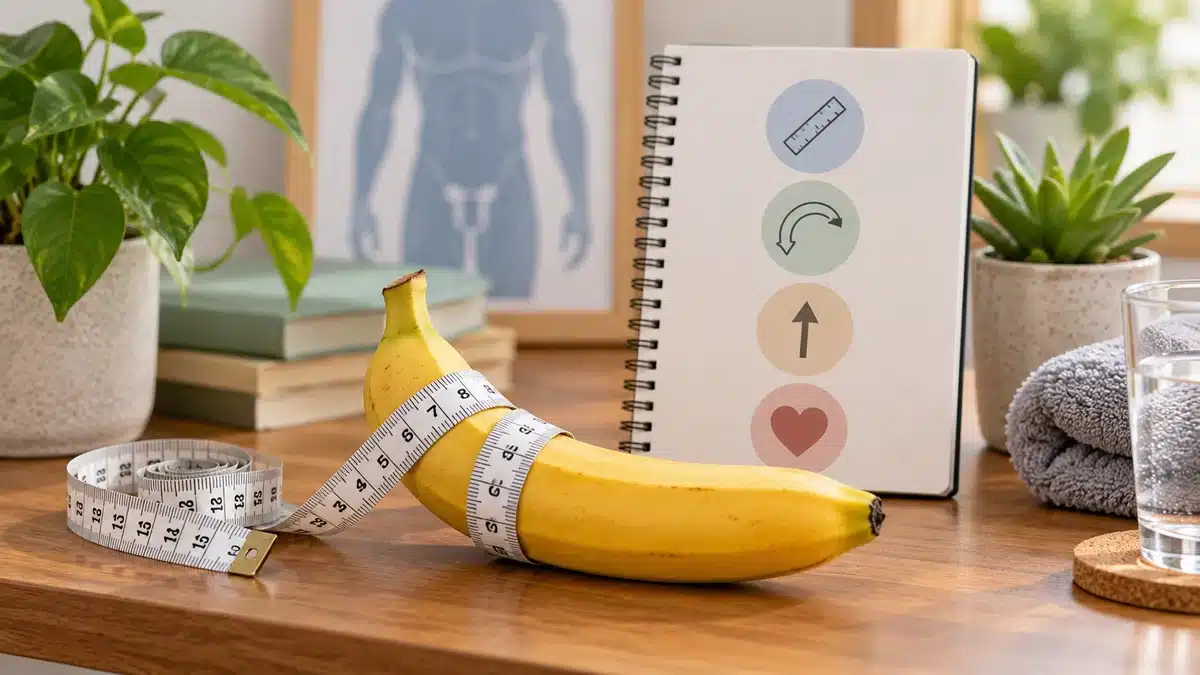
Most penis “facts” people search for come down to one reassuring point: there is a wide range of normal. Size, slight curvature, foreskin appearance and erection patterns vary a lot, and many common worries are based on myths rather than health problems.
1. Penis size varies a lot
There is a wide normal range in both flaccid and erect size. Size alone says very little about sexual ability, pleasure or fertility.
2. A soft penis does not predict erect size exactly
Some penises appear to change more between flaccid and erect states than others. That difference is common and not usually a problem.
3. A slight curve can be normal
Many penises are not perfectly straight. A mild upward, downward or sideways curve can be completely normal. The issue is not curvature by itself, but pain, major bending or a change that becomes bothersome.
4. Erections are not identical every time
Erections can vary with stress, tiredness, alcohol, medication, mood and context. A less-firm erection once in a while is not the same as ongoing erectile dysfunction.
5. Foreskin appearance varies too
Circumcised and uncircumcised penises both fall within normal variation. Foreskin retractability and appearance can change across puberty and adulthood.
6. One testicle often hangs lower
That asymmetry is common and usually normal. Bodies are rarely perfectly symmetrical.
7. Masturbation does not “use up” your penis
Masturbation is normal and does not damage the penis simply by being frequent. The more likely issue is temporary soreness from friction if technique is too rough or too dry.
8. Hygiene matters, but harsh products often do not help
Gentle hygiene is usually enough. Strong fragrances or harsh cleansers can irritate sensitive skin.
9. Pain is a more important warning sign than appearance alone
Appearance differences often fall within normal variation. Pain, sudden curvature changes, lumps, discharge or persistent erectile problems deserve more attention.
10. “Normal” includes lots of variation
Many anxieties about penises come from comparing bodies unrealistically. Variation is ordinary. If you are not in pain and function is okay, a lot of what you worry about may simply be personal anatomy.
If you are interested in broader body-variation topics, our guide to vulvar and genital variation covers the same principle from the other side.
Frequently asked questions
Is a curved penis normal?
A mild curve can be normal. Medical advice is more important when curvature is painful, pronounced or changes over time.
Does flaccid size predict erect size?
Not exactly. Flaccid and erect changes vary widely between individuals.
Is masturbation bad for the penis?
No. Masturbation itself is normal. Temporary irritation is more likely to come from friction than from the act itself.
When should penis symptoms be checked?
Pain, lumps, a new or severe curve, discharge or persistent erection problems are all sensible reasons to seek advice.
Is it normal for one testicle to hang lower?
Yes. Mild asymmetry is common.