
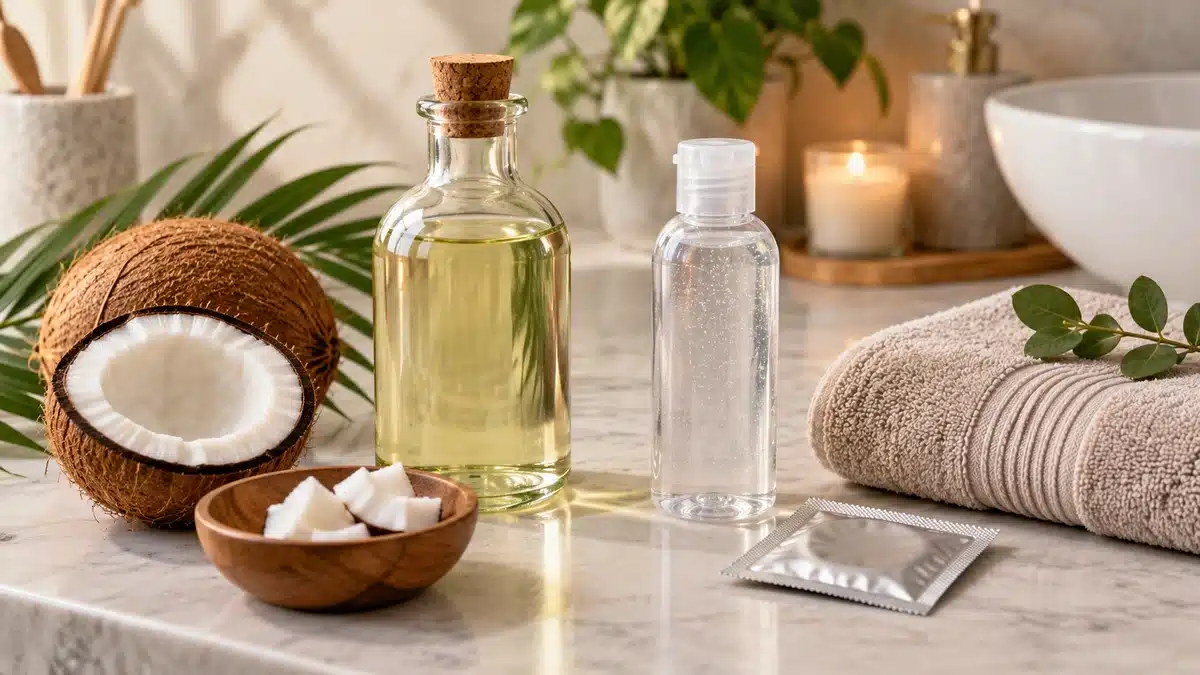
Natural Oils as Lube: What’s Safe With Condoms & Toys

In this article

Reviewed September 2026
Quick answer

Some people use plain plant oils such as coconut oil as sexual lubricant, but “natural” does not automatically mean compatible or irritation-free. Oil can damage latex and polyisoprene condoms. Water- or silicone-based lubricants are the safer default when you need broad condom compatibility.

Can natural oils be used as lube?

Some plant oils are slippery and long-lasting, so people sometimes use them for external sexual touch or penetration.

The main problem is compatibility. Oil can damage some condom materials, may stain fabric, can be difficult to wash away and can irritate sensitive skin in some people.

If you use latex or polyisoprene condoms, do not use oil-based lubricant. Planned Parenthood recommends water- or silicone-based lubricant with those condom materials.

Coconut oil

Coconut oil is the most commonly discussed natural oil for sex. Planned Parenthood notes that research on coconut oil as vaginal lubricant is limited and that it can irritate some people.

If someone chooses to use it, avoid products with added fragrance, sugar or flavoring.

It should not be combined with latex or polyisoprene condoms.

Olive oil

Olive oil can reduce friction, but it has the same major condom problem as other oils: it can weaken latex.

It is also not formulated specifically for genital use, so a dedicated sexual lubricant is usually a more predictable choice.

Almond, jojoba and other cosmetic oils

The old version of this Winixu article described several cosmetic oils as simply “safe.” That is too broad.

Formulas differ, allergies are possible, and fragrances or additives can irritate genital tissue. Oil compatibility with condoms also remains a concern.

Which oils damage condoms?

Planned Parenthood specifically warns against oil-based products with latex and polyisoprene condoms. Examples include coconut oil, mineral oil, baby oil, petroleum jelly and cooking oils.

Some polyurethane or nitrile barriers may be compatible with oil, but check the manufacturer’s instructions rather than guessing.

Are water-based lubes safer?

Water-based lubricant is a good general-purpose option because it works with condoms and most toys, is easy to clean and is widely available.

The tradeoff is that it may dry out faster and need reapplication.

What about silicone lube?

Silicone lubricant lasts longer and is generally compatible with condoms. However, some manufacturers recommend avoiding silicone lubricant with silicone toys because it may affect the toy surface.

Always check the toy manufacturer’s care instructions.

Should you put oil inside the vagina?

There is limited research on many household oils used vaginally. If you are prone to irritation or recurrent vaginal symptoms, a purpose-made lubricant is the more predictable option.

Stop using any product that causes burning, itching, swelling or persistent discomfort.

Can oils be used for anal sex?

A lubricant is especially important for anal penetration because the anus does not self-lubricate. But if condoms are part of your safer-sex plan, use a lubricant that is compatible with the condom material.

Quick compatibility guide:

  • Latex condom: use water- or silicone-based lube.
  • Polyisoprene condom: avoid oil-based lube.
  • Polyurethane or nitrile barrier: check manufacturer instructions.
  • Silicone toy: check whether silicone lube is recommended by the manufacturer.
  • Sensitive skin: avoid fragrances, flavors and unnecessary additives.

If you are choosing lubricant specifically for a masturbator, see our guide to lubricant for Fleshlights and similar toys.

Frequently asked questions

Is coconut oil safe to use as lube?

Some people use plain coconut oil, but research is limited, irritation is possible and it should not be used with latex or polyisoprene condoms.

Can natural oils break condoms?

Yes. Oil-based products can damage latex and polyisoprene condoms and increase the chance of breakage.

What lube is safest with condoms?

Water-based and silicone-based lubricants are broadly compatible with condoms, though you should always check the condom package.

Can olive oil be used as sexual lubricant?

It is slippery, but it is not compatible with latex condoms and is not specifically formulated for genital use.

Is natural lube better than commercial lube?

Not automatically. Purpose-made lubricants usually provide clearer information about ingredients, condom compatibility and intended use.

Sources and further reading

About Winixu.net: Educational and informational guides about sexuality, relationships, intimacy, kinks and adult lifestyle. Content is intended for adults.

Natural Oils as Lube: What’s Safe With Condoms & Toys

Reviewed September 2026
Quick answer

Some people use plain plant oils such as coconut oil as sexual lubricant, but “natural” does not automatically mean compatible or irritation-free. Oil can damage latex and polyisoprene condoms. Water- or silicone-based lubricants are the safer default when you need broad condom compatibility.

Can natural oils be used as lube?

Some plant oils are slippery and long-lasting, so people sometimes use them for external sexual touch or penetration.

The main problem is compatibility. Oil can damage some condom materials, may stain fabric, can be difficult to wash away and can irritate sensitive skin in some people.

If you use latex or polyisoprene condoms, do not use oil-based lubricant. Planned Parenthood recommends water- or silicone-based lubricant with those condom materials.

Coconut oil

Coconut oil is the most commonly discussed natural oil for sex. Planned Parenthood notes that research on coconut oil as vaginal lubricant is limited and that it can irritate some people.

If someone chooses to use it, avoid products with added fragrance, sugar or flavoring.

It should not be combined with latex or polyisoprene condoms.

Olive oil

Olive oil can reduce friction, but it has the same major condom problem as other oils: it can weaken latex.

It is also not formulated specifically for genital use, so a dedicated sexual lubricant is usually a more predictable choice.

Almond, jojoba and other cosmetic oils

The old version of this Winixu article described several cosmetic oils as simply “safe.” That is too broad.

Formulas differ, allergies are possible, and fragrances or additives can irritate genital tissue. Oil compatibility with condoms also remains a concern.

Which oils damage condoms?

Planned Parenthood specifically warns against oil-based products with latex and polyisoprene condoms. Examples include coconut oil, mineral oil, baby oil, petroleum jelly and cooking oils.

Some polyurethane or nitrile barriers may be compatible with oil, but check the manufacturer’s instructions rather than guessing.

Are water-based lubes safer?

Water-based lubricant is a good general-purpose option because it works with condoms and most toys, is easy to clean and is widely available.

The tradeoff is that it may dry out faster and need reapplication.

What about silicone lube?

Silicone lubricant lasts longer and is generally compatible with condoms. However, some manufacturers recommend avoiding silicone lubricant with silicone toys because it may affect the toy surface.

Always check the toy manufacturer’s care instructions.

Should you put oil inside the vagina?

There is limited research on many household oils used vaginally. If you are prone to irritation or recurrent vaginal symptoms, a purpose-made lubricant is the more predictable option.

Stop using any product that causes burning, itching, swelling or persistent discomfort.

Can oils be used for anal sex?

A lubricant is especially important for anal penetration because the anus does not self-lubricate. But if condoms are part of your safer-sex plan, use a lubricant that is compatible with the condom material.

Quick compatibility guide:

  • Latex condom: use water- or silicone-based lube.
  • Polyisoprene condom: avoid oil-based lube.
  • Polyurethane or nitrile barrier: check manufacturer instructions.
  • Silicone toy: check whether silicone lube is recommended by the manufacturer.
  • Sensitive skin: avoid fragrances, flavors and unnecessary additives.

If you are choosing lubricant specifically for a masturbator, see our guide to lubricant for Fleshlights and similar toys.

Frequently asked questions

Is coconut oil safe to use as lube?

Some people use plain coconut oil, but research is limited, irritation is possible and it should not be used with latex or polyisoprene condoms.

Can natural oils break condoms?

Yes. Oil-based products can damage latex and polyisoprene condoms and increase the chance of breakage.

What lube is safest with condoms?

Water-based and silicone-based lubricants are broadly compatible with condoms, though you should always check the condom package.

Can olive oil be used as sexual lubricant?

It is slippery, but it is not compatible with latex condoms and is not specifically formulated for genital use.

Is natural lube better than commercial lube?

Not automatically. Purpose-made lubricants usually provide clearer information about ingredients, condom compatibility and intended use.

Sources and further reading

Leave a Comment