
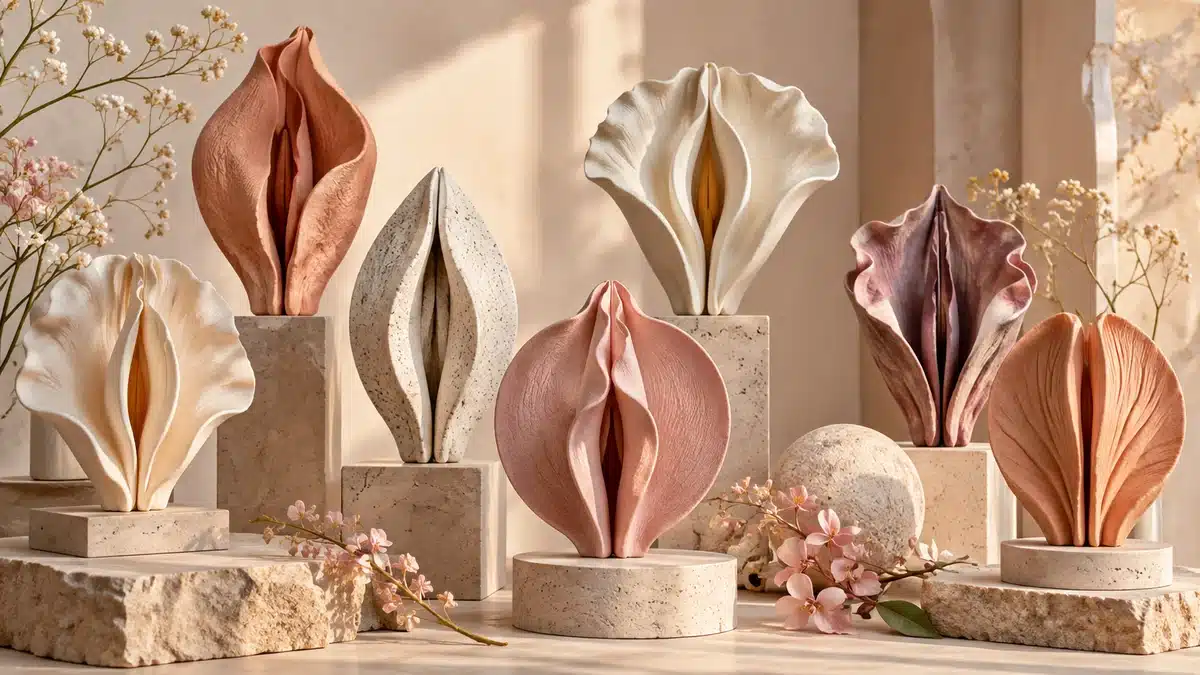
There is no medically recognized number of “vagina types.” The vagina is the internal muscular canal; most visible differences people describe online as vagina shapes are actually variations in the vulva, especially the labia. Medical organizations emphasize that vulvas naturally vary widely in size, shape, symmetry and color.
How many vagina types are there?
There is no medical classification that divides vaginas into a fixed number of types. Lists claiming there are five, seven or nine “vagina shapes” are usually describing the appearance of the external genital area rather than a scientific anatomical category.
That distinction matters because the vagina is the internal muscular canal. The external genital structures you can see are collectively called the vulva.
Vagina vs vulva: what is the difference?
The vulva includes structures such as the labia majora, labia minora, clitoris, urethral opening and vaginal opening. The vagina begins at the vaginal opening and extends internally toward the cervix.
Using “vagina” as a general word for all external genital anatomy is common in everyday speech, but it can create confusion when discussing appearance or health.
Why do vulvas look different?
Natural variation can affect many visible features, including:
- how far the labia minora extend beyond the labia majora;
- whether one side is longer than the other;
- the width and fullness of the outer labia;
- skin color and pigmentation;
- clitoral hood size and visibility;
- changes associated with puberty, pregnancy, aging and menopause.
Asymmetry is common. Bodies are not perfectly symmetrical, and labia do not need to match from one side to the other.
Are there common vulva shapes?
You may see informal labels online that group vulvas according to whether the inner labia are visible, hidden, longer on one side or more prominent. These can be useful as illustrations of diversity, but they are not medical diagnoses or official anatomical “types.”
It is more accurate to think of vulvar appearance as a spectrum of normal variation rather than a set of categories.
What is considered a normal vulva?
ACOG notes that there is a wide range of normal genital appearance. The labia minora may extend beyond the labia majora or may remain mostly hidden, and uneven labia are also normal. Cleveland Clinic similarly emphasizes that genital anatomy varies greatly between individuals.
Appearance can also change over a lifetime, so comparing yourself with one photograph, illustration or pornography scene is not a useful medical standard.
Can sex change the shape of your vagina?
Routine sexual activity does not create a permanent “type” of vagina. The vagina is elastic tissue designed to stretch and contract. Temporary changes can occur with arousal, childbirth, hormones and aging, but sexual history cannot be reliably determined by looking at genital anatomy.
When should you talk to a healthcare professional?
Normal appearance varies widely, but new or persistent symptoms deserve attention. Seek medical advice if you notice unexplained pain, sores, persistent itching or burning, a new lump, significant swelling, unusual bleeding or a skin change that does not resolve.
For more sexual-health information, you can also read our article about clitoral sensitivity.
Frequently asked questions
How many types of vaginas are there?
There is no medically recognized fixed number of vagina types. Most online shape categories actually describe variations in the external vulva and labia.
Is the vulva the same as the vagina?
No. The vulva is the external genital area, while the vagina is the internal muscular canal beginning at the vaginal opening.
Is it normal for inner labia to stick out?
Yes. The labia minora may extend beyond the labia majora or may be mostly covered. Both appearances fall within normal variation.
Is it normal for one labia to be longer than the other?
Yes. Labial asymmetry is common and does not by itself indicate a medical problem.
Can you tell how sexually active someone is by their vagina?
No. Genital appearance cannot reliably show a person’s sexual history.